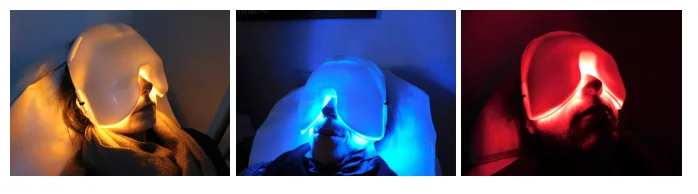
Light-based therapies use selected wavelengths or controlled light pulses to target vascular, inflammatory and cellular mechanisms involved in dry eye disease and meibomian gland dysfunction. They include technologies such as Intense Pulsed Light (IPL) and Photobiomodulation (PBM), which act through different but potentially complementary mechanisms.
Light-Based Therapies
Intense Pulsed Light (IPL)
Light-based treatment targeting inflammatory and vascular components of meibomian gland dysfunction.
IPL delivers controlled pulses of broad-spectrum light to the periocular skin.
Its effects may include reduction of abnormal telangiectatic vessels, modulation of inflammation, and improvement of meibomian gland function.
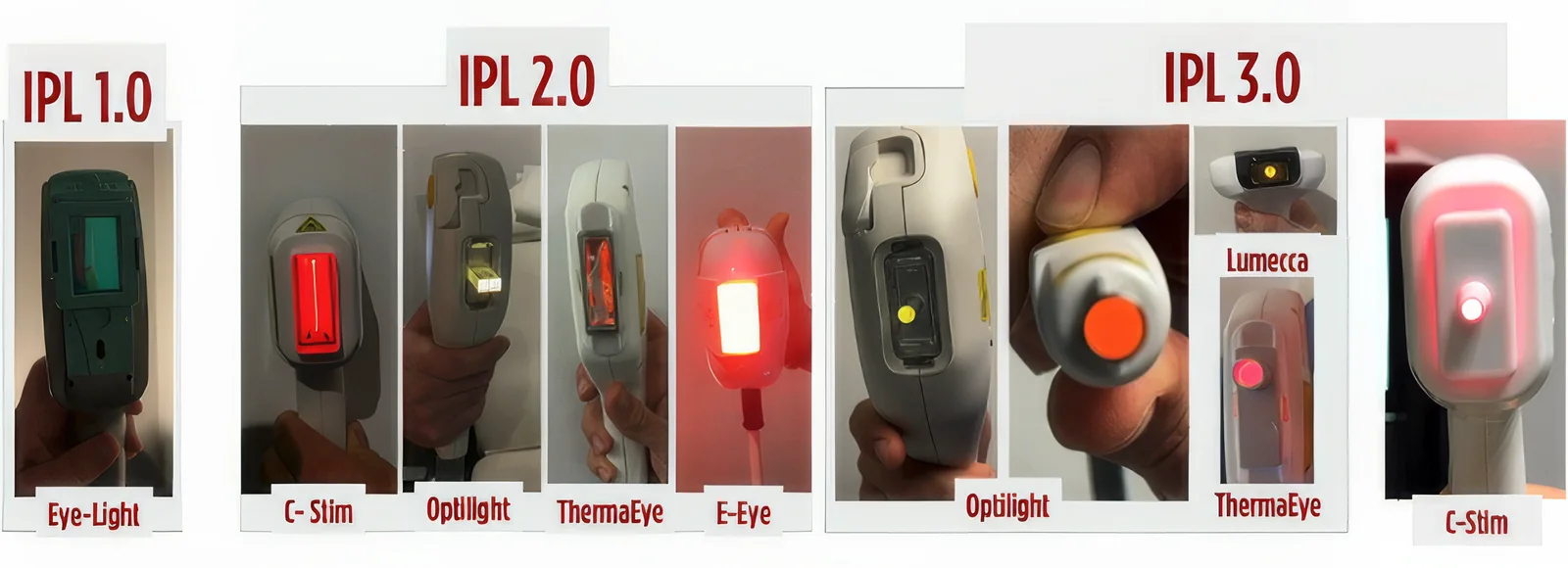
- First Generation, IPL 1.0 Dermatology-based IPL systems without pulse-train technology. Originally designed for dermatological applications, these systems deliver conventional IPL pulses and were not specifically developed for the treatment of the periocular area.
- Second Generation, IPL 2.0 Dermatology-based IPL systems adapted for ophthalmic use. These systems incorporate controlled pulse trains and ophthalmology-specific treatment protocols. Energy is typically delivered to the periocular skin, with therapeutic effects reaching the eyelids through adjacent tissue diffusion.
- Third Generation, IPL 3.0 IPL systems specifically designed for ophthalmology. These devices combine controlled pulse-train technology with miniaturized light guides, allowing precise and direct application to the eyelids and targeted treatment of the periocular vascular and inflammatory components of meibomian gland dysfunction.
Photobiomodulation (PBM)
Light-based therapy targeting cellular metabolism and inflammatory pathways.
Photobiomodulation uses selected wavelengths of light to influence cellular metabolism and biological signaling.
Its potential effects include modulation of mitochondrial activity and inflammatory pathways.
PBM may therefore be integrated into multimodal treatment strategies when cellular dysfunction and inflammation contribute to ocular surface disease.