Intense Pulsed Light (IPL) is a non-coherent, polychromatic light technology delivering controlled pulses of broad-spectrum light to the periocular tissues.
Originally developed for dermatological indications, IPL has progressively evolved toward ophthalmology-specific systems and treatment protocols for meibomian gland dysfunction (MGD) and dry eye disease (DED).
Its principal clinical interest lies in targeting the vascular, inflammatory, and obstructive components of MGD.
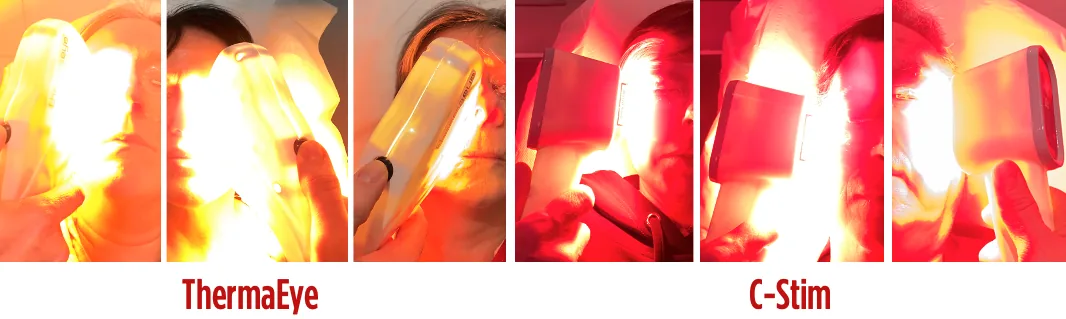
How IPL works
IPL acts through several complementary mechanisms.
Vascular effect
Abnormal telangiectatic vessels of the lid margin and periocular skin may contribute to chronic inflammation in ocular rosacea and MGD.
IPL energy is preferentially absorbed by hemoglobin, producing selective photothermolysis of superficial abnormal vessels.
This vascular effect may reduce the inflammatory mediators associated with periocular telangiectasia and ocular rosacea.
Anti-inflammatory effect
IPL treatment has been associated with reductions in several inflammatory markers and improvements in clinical signs of ocular surface inflammation.
This effect is particularly relevant in patients with MGD associated with lid-margin telangiectasia and ocular rosacea.
Effect on meibum and gland function
The thermal component generated during IPL treatment may contribute to reducing meibum viscosity and facilitating gland expression.
Clinical studies have reported improvements in meibum quality, gland expressibility, tear-film stability, and symptoms following IPL treatment, particularly when IPL is combined with meibomian gland expression.
From dermatology to ophthalmology
Evolution of IPL Technology
IPL 1.0
Dermatology-based IPL systems without pulse-train technology.
Originally designed for dermatological applications, these systems deliver conventional IPL pulses and were not specifically developed for the periocular area.
IPL 2.0
Dermatology-based IPL systems adapted for ophthalmic use.
These systems incorporate controlled pulse trains and ophthalmology-specific treatment protocols.
Energy is typically delivered to the periocular skin, with therapeutic effects reaching the eyelid tissues indirectly.
IPL 3.0
IPL systems specifically designed for ophthalmology.
These devices combine controlled pulse-train technology with miniaturized light guides, allowing more precise and direct treatment of the eyelids and periocular tissues.
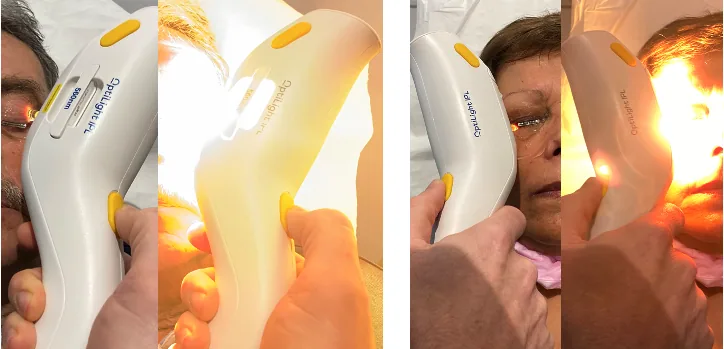
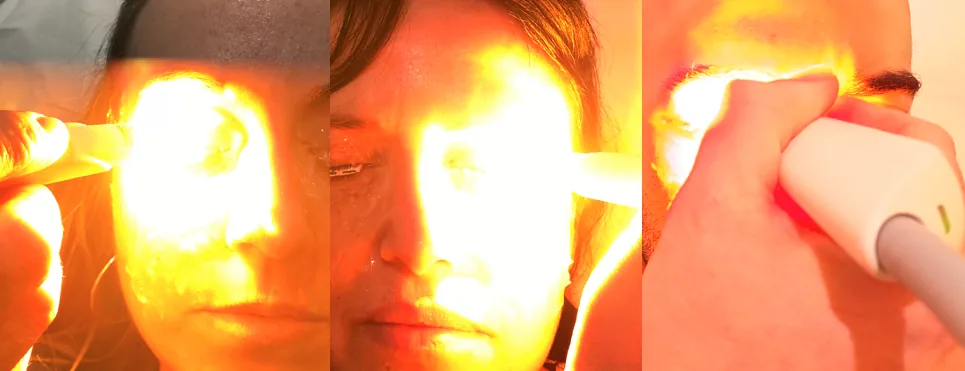
Why treat all four eyelids?
Meibomian gland dysfunction frequently affects both the upper and lower eyelids.
Treating only the inferior periocular area may therefore leave part of the glandular and vascular disease untreated.
Studies evaluating IPL application to both the upper and lower eyelids have reported significant improvements in tear-film stability, ocular surface staining, meibum quality, gland expressibility, and lid-margin telangiectasia.
For modern ophthalmic IPL protocols, assessment and treatment of all four eyelids should therefore be considered whenever the device, ocular protection, and clinical indication allow it.
IPL and meibomian gland expression
IPL and gland expression should be considered complementary rather than competing treatments.
IPL addresses vascular, inflammatory, thermal, and biological components of MGD, while gland expression mechanically evacuates retained or altered meibum.
Several randomized studies and meta-analyses support the combination of IPL + meibomian gland expression (MGX), with improvements in symptoms, tear break-up time, meibum quality, and gland function.
IPL modifies the inflammatory and vascular environment.
Gland expression evacuates obstructed meibum.
Clinical indications
IPL is particularly relevant when dry eye disease is associated with:
- meibomian gland dysfunction;
- lid-margin telangiectasia;
- ocular rosacea;
- altered or viscous meibum;
- gland obstruction;
- evaporative tear-film instability;
- inflammatory signs of the eyelid margin and ocular surface.
Patient selection should remain based on the complete clinical and diagnostic evaluation rather than on a single parameter.
Treatment protocol
Most clinical protocols use a series of repeated IPL sessions rather than a single treatment.
Published studies commonly include three to four treatment sessions separated by approximately two to four weeks, although the exact number of sessions and treatment interval depend on the device, disease severity, and clinical protocol.
A complete ophthalmic IPL protocol should address all four eyelids whenever the device and ocular protection allow safe treatment. Meibomian gland dysfunction and lid-margin vascular abnormalities are not limited to the lower eyelids; the upper eyelids may carry a substantial part of the glandular, obstructive, and telangiectatic disease.
Treating only the lower periocular area should therefore be considered an incomplete approach when clinically significant disease is also present in the upper eyelids.
For WIDES, the principle is clear: Assess all four eyelids. Treat all four eyelids when indicated and technically possible.
This four-eyelid strategy aims to address the entire meibomian gland system and the associated periocular vascular and inflammatory involvement rather than treating only part of the disease.
Whenever appropriate, IPL should be combined with controlled meibomian gland expression to facilitate evacuation of altered or retained meibum.
Long-term maintenance should be individualized according to symptoms, gland function, recurrence of telangiectasia and inflammation, tear-film stability, and ocular surface findings.
Clinical evidence
IPL is now included among the device-based treatments reviewed in TFOS DEWS III for the management of MGD-related dry eye disease.
Randomized controlled trials have demonstrated improvements in several clinical outcomes, including:
- dry eye symptoms;
- tear break-up time;
- NIBUT;
- meibum quality;
- gland expressibility;
- lid-margin telangiectasia.
Recent systematic reviews and meta-analyses support a clinically meaningful benefit of IPL in MGD-related dry eye disease, particularly when treatment is combined with meibomian gland expression.
Safety and ocular protection
IPL treatment in the periocular area requires strict attention to ocular safety.
Treatment parameters must be adapted to the patient's skin phototype, device characteristics, treatment area, and clinical indication.
When IPL is applied directly to the eyelids, appropriate ocular protection is mandatory.
Upper-eyelid treatment should only be performed using devices and protocols specifically designed to permit safe treatment in this area.
IPL within the Interventional Dry Eye Concept
IPL should not be viewed as a stand-alone treatment for every patient with dry eye disease.
Its greatest value comes from identifying patients in whom vascular inflammation, ocular rosacea, gland obstruction, and abnormal meibum represent important components of the disease.
IPL may then be combined with other interventions according to the individual pathophysiological profile.
Accurate DiagnosisVascular & Inflammatory AssessmentIPLCombined Treatment When Needed
Clinical take-home message
IPL is a major interventional treatment for MGD-related dry eye disease, particularly when vascular, inflammatory, and obstructive mechanisms coexist.
Modern ophthalmology-specific systems allow increasingly precise treatment of the eyelids, while combination with meibomian gland expression may enhance functional outcomes.
The objective is not simply to apply light, but to target the mechanisms responsible for each patient's disease.